50/30/20 Budgeting Explained: A Simple Rule for Managing Your Money
In summary: The 50/30/20 rule is a budgeting method that splits your after-tax income into three buckets: 50% for needs, 30% for wants, and 20% for savings and debt repayment. Its appeal is simplicity — instead of tracking dozens of line items, you manage three broad categories, which makes it one of the easiest budgets to actually stick to. It won’t fit every situation perfectly, especially in high-cost areas or on a very tight income, but as a starting framework for taking control of your money, it’s one of the most practical approaches there is.
If most budgeting advice has ever left you glassy-eyed — spreadsheets with forty categories, apps that ping you about a $4 coffee — the 50/30/20 rule is a breath of fresh air. It takes the entire complicated project of budgeting and reduces it to three numbers you can actually remember. That simplicity is the whole point, and it’s why this particular method has stuck around when more elaborate systems get abandoned.
Here’s exactly how it works, how to apply it to your own income, and where it does and doesn’t fit.
What the 50/30/20 rule actually is
The rule is built on a simple premise: most people don’t need a complicated budget. They need a balanced framework that keeps the essentials, the extras, and the future all in view at once.
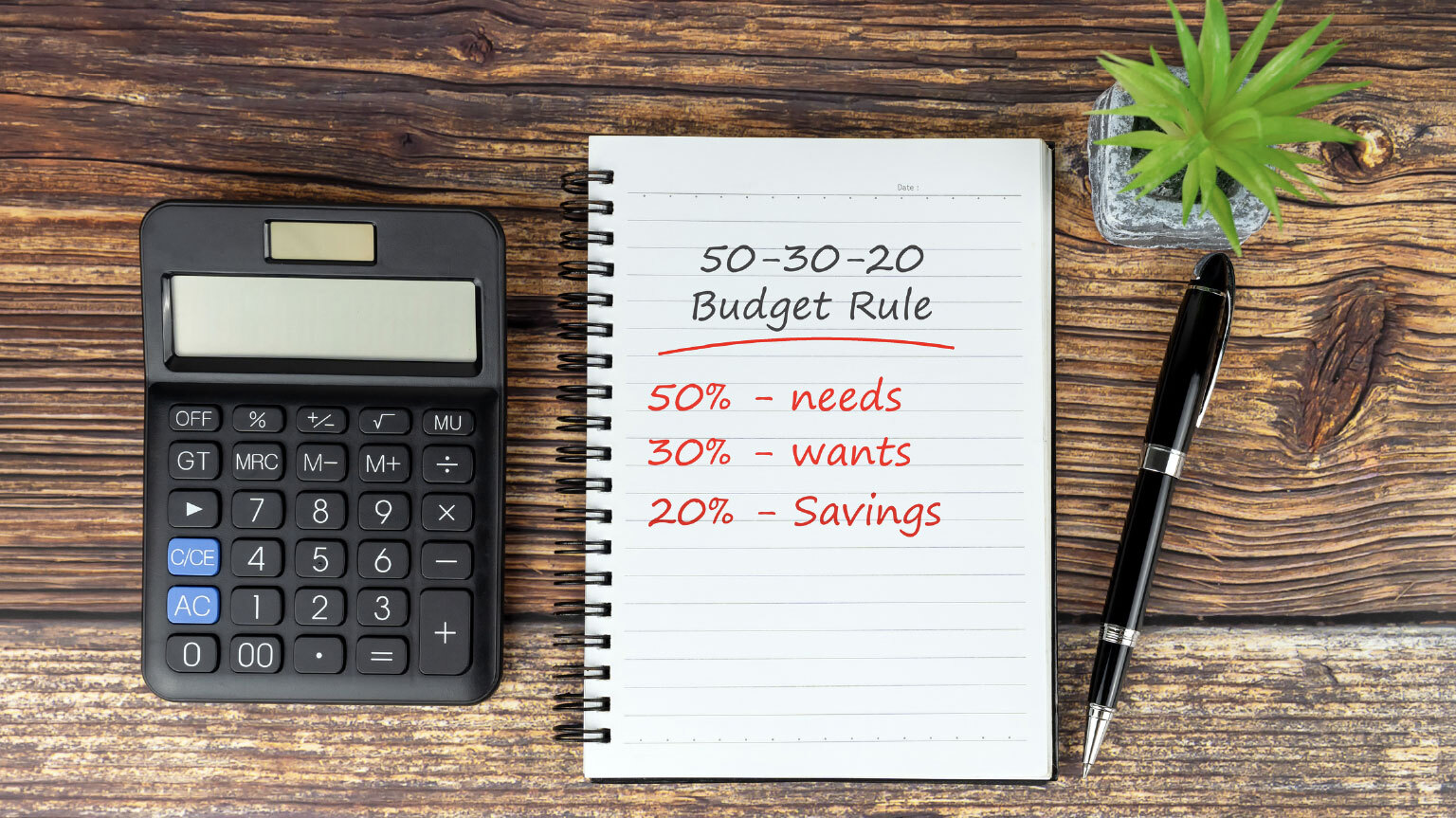
The framework divides your monthly after-tax income — the money that actually lands in your account — into three parts:
- 50% to needs — the things you genuinely must pay for
- 30% to wants — the things that make life enjoyable but aren’t essential
- 20% to savings and debt — building your future and paying down what you owe
That’s the entire rule. The power is in how few decisions it asks of you: three buckets, three percentages, done.
Breaking down the three categories
The categories sound obvious until you try to sort your actual spending — so here’s how to think about each one.
The 50%: Needs. These are the expenses you truly can’t avoid: housing (rent or mortgage), utilities, groceries, transportation to work, insurance, required debt payments, and basic necessities. The test is honest necessity — if skipping it would seriously disrupt your life or livelihood, it’s a need. Note that only the required payment on a debt counts as a need here — the card minimum, the loan payment, or the program deposit you’re committed to. Anything you pay above what’s required belongs in the 20% category, since that’s you actively getting ahead.
The 30%: Wants. This is everything that improves your life but that you could, in a pinch, live without: dining out, streaming subscriptions, hobbies, travel, the upgraded phone, gym memberships, gifts. Wants aren’t frivolous or something to feel guilty about — the 50/30/20 rule deliberately builds in room for enjoyment, which is a big reason it’s sustainable. A budget with no room for wants is a budget you’ll quit.
The 20%: Savings and debt. This is money aimed at your future: contributions to an emergency fund, retirement, other savings goals, and — importantly — any debt payments beyond what’s required. Paying extra toward a credit card belongs here, because you’re doing more than staying afloat; you’re actively improving your position.
The line between a need and a want is where most people get stuck, and there’s genuine judgment involved. A basic phone plan is a need; the premium unlimited plan has some “want” baked in. Groceries are a need; the specialty items and takeout lean toward wants. The goal isn’t perfect classification — it’s an honest, consistent one.
A worked example
Say your after-tax income is $4,000 a month. Under 50/30/20, that breaks down to:
- $2,000 for needs (50%) — rent, utilities, groceries, insurance, required debt payments, transportation
- $1,200 for wants (30%) — dining out, subscriptions, hobbies, non-essential shopping
- $800 for savings and debt (20%) — emergency fund, retirement, extra debt payments
You’d sit down, add up your actual needs, and check them against that $2,000 target. If your true needs come to $2,300, you’re over on the 50% — which is useful information, not a failure. It tells you to either find a way to reduce fixed costs or borrow a little from the “wants” bucket until things balance. The percentages are a target to steer toward, not a cage.
Who the 50/30/20 rule fits best
This method is an excellent fit if you want structure without the burden of detailed tracking, if you’re new to budgeting and want a place to start, or if you’ve tried granular budgets before and given up on them. Its low-maintenance design is its greatest strength — three categories are easy to hold in your head and hard to abandon.
It fits less neatly in a few situations. If you live somewhere with a very high cost of living, your needs may genuinely exceed 50% of your income, making the split hard to hit — though the framework is still useful as a target that shows you how stretched your essentials really are. And if your income is very tight, the 20% savings goal may not be realistic yet; in that case, the rule still works as a direction to grow toward rather than a standard to meet immediately. A more detailed, hands-on method might suit you better if you actively enjoy managing money down to the dollar — which is worth weighing directly, and something we cover in zero-based budgeting vs. 50/30/20.
Common pitfalls (and how to avoid them)
A few things trip people up with this method. The first is miscategorizing wants as needs — quietly labeling comforts as essentials until the 50% bucket swells and the math stops working. An honest gut-check on each expense keeps the framework meaningful.
The second is treating the percentages as rigid law. They’re a guideline. If your situation calls for 55/25/20 or 60/20/20, that’s fine — the spirit of the rule (keep needs in check, allow enjoyment, always pay your future) matters more than the exact figures.
The third is forgetting to actually automate it. The rule tells you the targets, but a budget still has to run in real life. Setting up your accounts and transfers so the 20% moves to savings automatically, and your spending money is clearly separated, is what turns the rule from a nice idea into a working system — the mechanics of which we cover in building a money system.
Final Words
The 50/30/20 rule endures because it respects something most budgets ignore: that a plan only works if it’s simple enough to keep. By reducing budgeting to three memorable numbers — half for needs, a third for the things you enjoy, a fifth for your future — it gives you real structure without demanding constant effort. It isn’t the most precise method, and it won’t fit every income perfectly, but as a way to finally get a handle on where your money goes, it’s hard to beat for sheer stickiness. Start with the three buckets, adjust the percentages to your reality, and let the simplicity do the work.
Frequently Asked Questions
For most people, especially beginners, yes — its strength is simplicity, which makes it one of the easiest budgeting methods to maintain over time. It gives you a balanced structure (essentials, enjoyment, and future all accounted for) without the burden of tracking dozens of categories. It’s less precise than a detailed method like zero-based budgeting, but a simple budget you keep beats a precise one you abandon.
A need is something you genuinely can’t go without — housing, utilities, groceries, transportation to work, insurance, and required debt payments. A want is something that improves your life but isn’t essential — dining out, subscriptions, hobbies, travel. The gray areas (like a basic vs. premium phone plan) involve judgment; the goal is an honest, consistent call rather than perfect classification.
Yes — but specifically debt payments above what you’re required to pay. Your required payments count as a need (the 50%), whether that’s a credit card minimum, a loan payment, or a deposit into a debt resolution program, because they aren’t optional. Anything extra you put toward debt goes in the 20% bucket, because you’re actively getting ahead rather than just staying current.
That’s common, especially in high-cost areas, and it doesn’t mean the method is useless. Treat the 50% as a target: if your needs run higher, the framework is showing you how stretched your essentials are, which is valuable information. You can adjust the ratios to fit your reality (say, 60/20/20) while keeping the core discipline of capping needs, allowing some wants, and always saving something.
Neither is universally better — they suit different people. 50/30/20 is simpler and easier to sustain; zero-based budgeting is more precise but more demanding. The right choice depends on how much detail you’ll realistically keep up with.
The information on this site is provided as a general resource and does not constitute legal, tax, or financial advice. While Beyond Finance strives to ensure accuracy, this content, including any third-party sources referenced, should not be the basis for any financial decision. For guidance specific to your situation, we recommend consulting a qualified professional.
