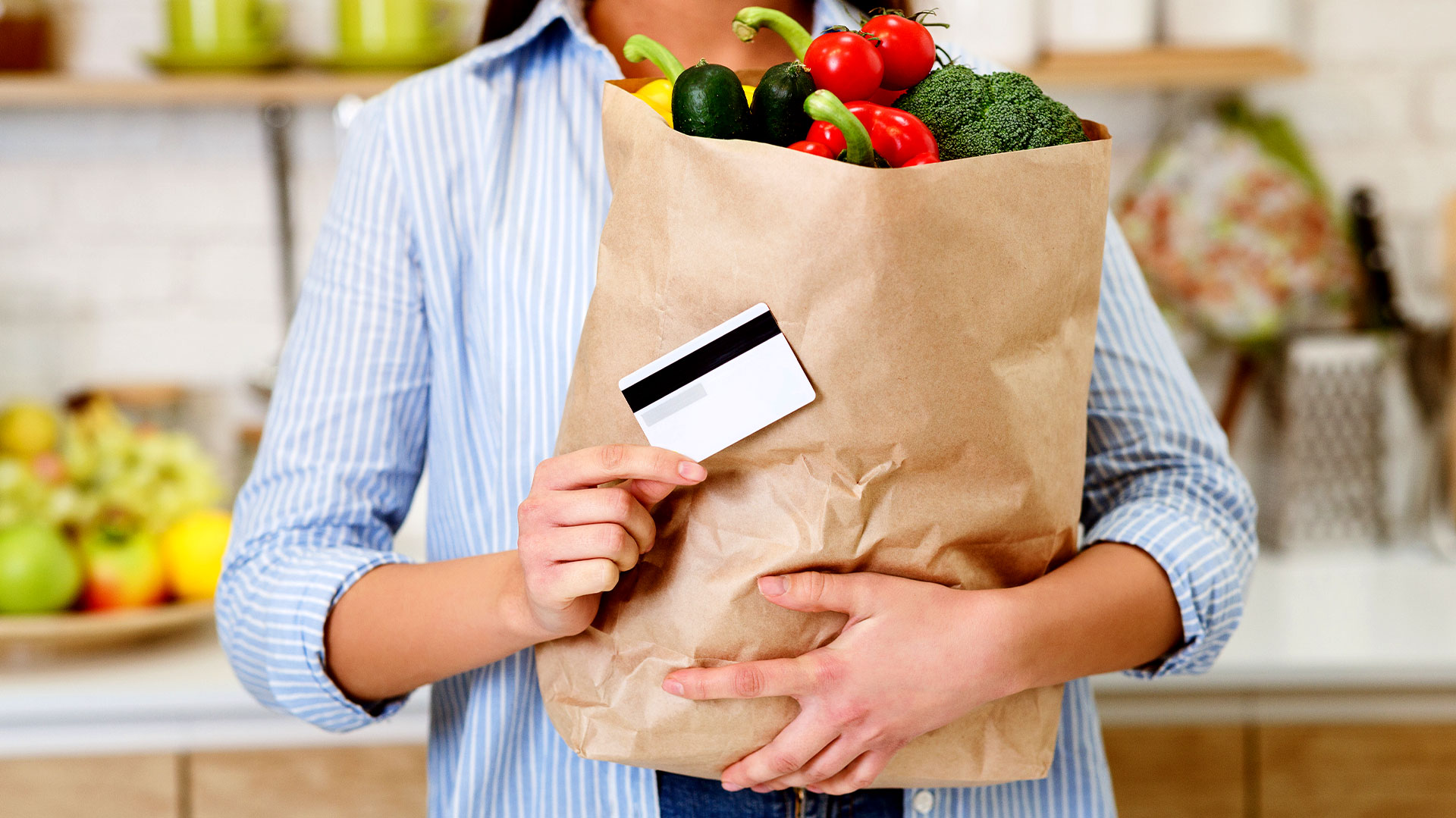
Is It Bad to Put Groceries on a Credit Card?
Whether you’re cooking for a big family or living on your own, food is an expensive and non-negotiable necessity. So it makes sense that many people use a credit card to buy groceries. Sometimes it’s about convenience or credit card rewards. But often, it’s the only way to get through the week. We wondered, “is it bad?”
Let’s walk through when using a credit card for food can be helpful, when it becomes a problem, and how to recognize which situation you’re in.
When Putting Groceries on a Credit Card Makes Sense — and When It Doesn’t
Putting groceries on a credit card isn’t automatically bad. For some people, it’s a useful tool. The key difference usually comes down to one thing: how quickly you’re able to pay off the balance.
When Using a Credit Card for Groceries Can Be Helpful
Using a credit card for groceries can make sense when it’s intentional and temporary, not something you rely on month after month without a payoff plan.
Here are a few situations where it may actually help:
-
You pay the balance in full each month.
If grocery charges are paid off before interest accrues, you’re not paying extra for your food. -
You’re using the card for convenience or rewards.
Some people prefer the protections or cashback that come with credit cards — as long as interest isn’t part of the equation. -
You’re managing short-term timing issues.
For example, buying groceries a few days before your paycheck hits, knowing you’ll pay the bill soon after.
For Example: Maria puts her weekly groceries on a credit card, but she pays her statement balance in full every month. Because she gets paid on an irregular schedule, the card helps her smooth out paycheck timing and earn rewards — without adding debt.
In a situation like this, the card is just a tool.
When Using a Credit Card for Groceries Is Bad
The trouble starts when grocery spending moves from convenience to dependence.
Using a credit card for food may be harmful if:
- Grocery charges carry over month to month
- You’re making only the minimum payment
- You’re relying on credit cards to afford basic food needs
- New grocery purchases are layered on top of old balances
At that point, everyday meals start becoming long-term debt.
For Example: James uses his credit card for groceries because his budget is tight and he regularly doesn’t have enough cash for essentials. He makes the minimum payment each month, but the charges are stacking up. Over time, he’s paying interest on groceries he ate months ago.
How Interest Turns Food Into Long-Lasting Debt
This is where many people feel stuck — because necessities are being financed with high-interest credit. When you carry a balance on a credit card, interest is added to what you owe. That includes grocery purchases, just like any other charge.
Here’s a simplified example using the national average credit card interest rate (around 24% APR) and the average grocery cost per month, $504.
Imagine you put $504 in groceries on a credit card and don’t pay that balance off in full. At a 24% interest rate, that balance starts growing right away — even if you never use the card again.
- After one month: The $504 balance grows to about $514.
- After six months: It increases to roughly $565–$570.
- After one year: That same $504 grocery run costs around $640.
And that’s only for one month.
(Example for illustrative purposes only. Actual interest depends on your card’s APR and payment behavior.)
Why This Happens So Easily
Rising food prices have pushed grocery costs higher for nearly everyone. Because food is a necessity, putting those charges on a credit card can feel separate from how we view other types of debt.
It’s common not to realize how much of your budget (and credit card bill) is tied to everyday food spending until you step back and look at the bigger picture.
Signs Your Grocery Spending May Need to Change
Some common signs your grocery spending on credit is becoming an issue …
- You’re surprised by your credit card balance
- Minimum payments have become the norm
- One card is used mostly for food
- Grocery shopping feels stressful instead of routine
None of these mean you’ve done something wrong. They simply point to a pattern that may no longer be serving you.
What To Do If You Recognize These Patterns
If you recognize yourself in these patterns, the first step isn’t drastic change — it’s awareness.
Start by noticing, without judgment, how much of your balance is tied to food and other survival expenses. From there, look for small, manageable adjustments where possible; even partial changes can reduce the interest you pay over time.
And If grocery spending has become part of a larger cycle of credit card debt, know that support for unsecured debt is available. Many people explore options to understand what relief could look like — not because they’ve given up.
Final Thoughts
So, is it bad to put groceries on a credit card?
No, not inherently. If groceries are paid off quickly, a credit card can be a helpful tool. If they’re piling onto existing debt and never getting paid off, it’s a signal your finances are in trouble. This debt can slowly increase financial stress over time.
Needing credit for food is more common than many people admit. Understanding how it affects your finances is a meaningful first step toward change.