Part 1.6 Three techniques for financial calm
Three techniques
for financial calm
Three simple, evidence-based practices that, with use, become your nervous system’s new default response to financial stress.
This is the part of this curriculum I wish someone had handed me years ago.
Everything we’ve done so far — understanding your financial nervous system, identifying your survival mode patterns, mapping your stress signals — has been diagnostic. Necessary, important, and foundational. But this part is where the work becomes practical. This is where you get the actual tools.
I’m going to teach you three techniques. They’re simple. They’re evidence-based. And with practice, they become automatic — your nervous system’s new default response to financial stress instead of the old one.
Each one is taught in three parts: what it is, when to use it, and exactly how to do it. Read through all three before you decide where to start. There’s a matching guide at the end.

Technique 1: The Body Scan
What it is. A 60-second pause to check in with your nervous system before any financially activated moment — before you act, avoid, agree, or decide.
When to use it. Before any “want” (instead of “need”) purchase. Before you open a financial statement you’ve been avoiding. Before you say yes to a financial request you’re not sure about. Before any money conversation you can feel yourself bracing for. Any time your nervous system is already firing and a financial decision is in front of you.
A simple rule I come back to often for spending: if it’s not a “hell yes,” it’s a “hell no.”
How to do it.
- Pause. Whatever you’re about to do — stop. Breathe.
- Scan, head to toe. Take 30 seconds. Notice your jaw, your chest, your stomach, your hands. Are any of your signature stress signals firing right now?
- Ask one question. “Am I doing this from a centered place — or am I reacting?”
- Decide from centeredness. If your body is calm, proceed. If your body is uncentered, wait. Give yourself at least 20 minutes before you act, respond, or decide. If it’s a purchase you wanted to make, set a 24-hour timer. If you still want it tomorrow from a recentered state, buy it then.
The principle: you’re not stopping yourself from doing things. You’re making sure that what you do is chosen — not driven by survival mode.
Technique 2: Financial Breathwork
What it is. A specific breathing pattern that down-regulates the sympathetic nervous system in 90 seconds or less.
When to use it. Before checking your bank account. Before opening financial mail. Before a money conversation. Before paying bills. Anytime your signature stress signals fire — this is the technique to reach for first.
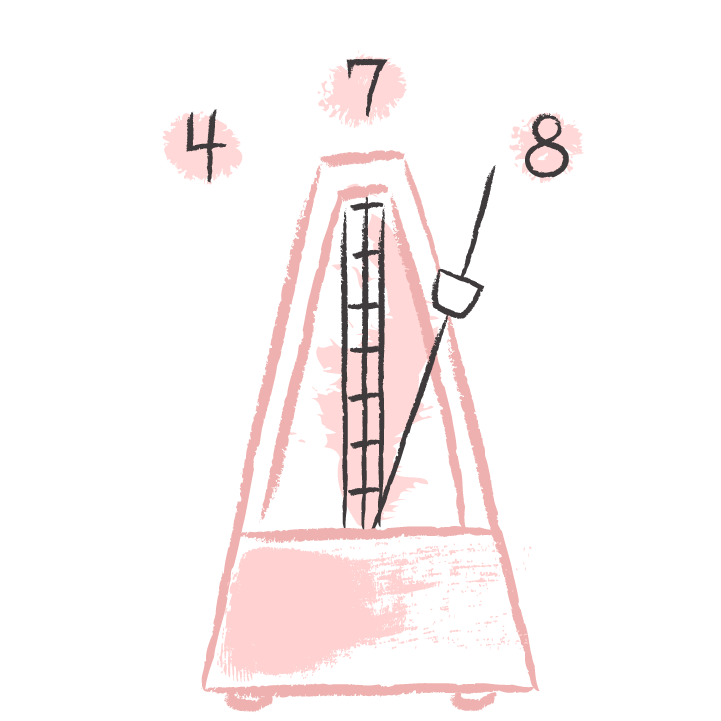
How to do it (the 4-7-8 pattern).
- Sit or stand somewhere you won’t be interrupted for two minutes.
- Exhale completely through your mouth, making a soft “whoosh” sound.
- Inhale through your nose for 4 counts.
- Hold your breath for 7 counts.
- Exhale through your mouth for 8 counts — the whoosh again.
- Repeat the cycle 4 times total.
You’ll feel a measurable shift. Your heart rate slows. Your shoulders drop. Your prefrontal cortex comes back online.
Why it works. The extended exhale directly activates the parasympathetic nervous system. You’re not calming yourself down through willpower — you’re using your breath as a physiological lever to shift your state. Your breath is the only autonomic function you can consciously control. It is always with you, it costs nothing, and it works.

Technique 3: The Pause Practice
What it is. A structured ritual for creating space between a financial trigger and your response to it — whatever that response tends to be. This is the most important practice in this entire module.
When to use it. Any time your body, your instinct, or your gut flags that something financially activated is happening. That might be the urge to buy something. It might equally be the urge to avoid something, to say yes when you mean no, to shut down a conversation, or to stare at a bill without opening it for the fourth day in a row.
How to do it.
- Pause physically. Step away from whatever you’re doing. Stand up. Move to another room if you need to.
- Name the moment. Say it out loud or internally: “I’m pausing because something in me is activated right now.”
-
Ask the four questions.
- What was happening before I felt this way?
- What was I feeling — emotionally, or in my body?
- What need am I actually trying to meet — or avoid?
- What’s the most centered response available to me right now?
- Wait at least 20 minutes. Make tea. Walk around the block. Call someone. Do anything else.
- Return and decide. From a more centered place: what do I actually want to do here? If the original impulse still feels right, act on it without guilt. If it doesn’t, you’ve just interrupted a survival mode pattern.
The principle: the pause is not denial, and it’s not avoidance of avoidance. It’s the gap between stimulus and response — and that gap is where freedom lives. Most survival mode behavior happens in the absence of that gap. Creating the gap is the practice.
Which technique should you start with?
You don’t need to do all three at once. Pick one this week based on your dominant pattern from the quiz:
- If your dominant pattern is flight or freeze: start with financial breathwork before opening anything financial.
- If your dominant pattern is relief-seeking or impulse: start with the body scan.
- If your dominant pattern is fight, control, or fawn: start with the pause practice.
Practice it for seven days. Add the next technique the following week. Within three weeks, all three will be available to you — and your financial nervous system will already be measurably more centered.
A word about the learning curve
The first time you do these, they will feel awkward. Maybe even a little silly. That’s completely normal — you’re asking your nervous system to do something new, and new things feel clunky before they feel natural.
By the tenth time, they’ll feel familiar. By the fiftieth, they’ll be automatic. You’re not trying to never feel financial stress again. You’re building the muscle of meeting it skillfully. And muscles get stronger with use.
And here’s what I want you to hold onto in those early awkward moments when it doesn’t feel like it’s working yet: I’ve watched people do exactly this work and come out the other side with a relationship with money they didn’t think was possible for them. I could see it in them before they could see it in themselves. I can see it in you too — even if you can’t yet.
