Video: Men, Money, & Mental Health
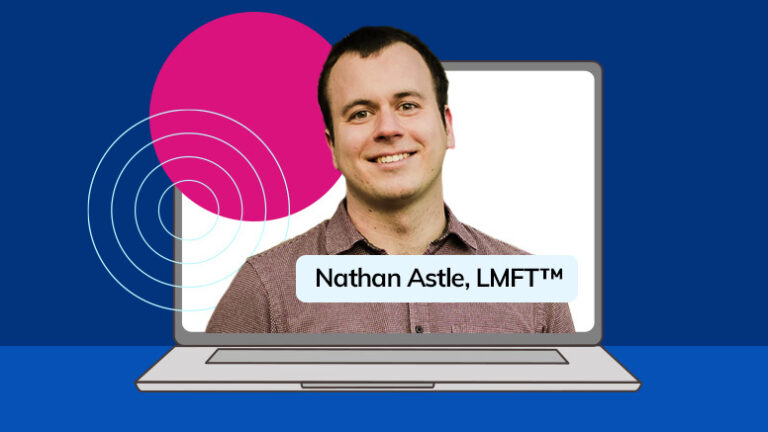
Nathan Astle, Beyond Finance’s Certified Financial Therapist, discusses the financial pressures men face, and how they can regain control of their finances and wellness.

CFT™ | Founder, Financial Therapy Clinical Institute
Nathan Astle is a Certified Financial Therapist™, and one of the country's leading voices on the emotional and relational dimensions of money. At Beyond Finance, he leads weekly financial wellness sessions with clients navigating debt, and brings a clinical framework to financial recovery that no other debt solutions company offers.
Nathan Astle didn't set out to become a financial therapist. He followed his curiosity about the hidden connections between money, relationships, and emotional wellbeing — and built a career at the intersection of all three. Today he is one of a small number of practitioners in the country who holds both a marriage and family therapy degree and a Certified Financial Therapist™ designation, giving him a genuinely rare clinical perspective on why people struggle with money and what actually helps them change.
His core belief: money is not a math problem. It is an emotional one. The way people think, feel, and behave around finances is shaped by family history, shame, fear, relationships, and identity — and until those layers are addressed, financial recovery is incomplete. At Beyond Finance, Nathan leads weekly group sessions with clients, helping them work through not just the mechanics of debt but the emotional weight that keeps people stuck.
Nathan is also the founder of the Financial Therapy Clinical Institute — a training and research hub for mental health and financial professionals seeking to bridge the gap between emotional well-being and financial health. He co-hosts the Money Minus Shame Podcast with Tyrone White Jr., and writes a monthly column for Psychology Today entitled "The Psychology of Debt."
Beyond Finance’s graduating clients rate their financial habits at an average of 5.7 out of 10 before enrolling in the program, and 8.1 out of 10 after — a 42% improvement that reflects the kind of behavioral and emotional change Nathan's work is designed to support.
Professional Roles & Board Memberships:
Awards & Recognition:
Nathan co-leads Beyond Finance's weekly client group sessions — delivering clinically-informed financial wellness support to hundreds of clients each week. He was brought to Beyond Finance because of his rare combination of marriage and family therapy credentials and financial therapy certification, making him uniquely qualified to address both the emotional and relational dimensions of debt.
He collaborates closely with Dr. Erika Rasure to deliver Beyond Finance's financial wellness programming and co-develop the content and tools that make Beyond Finance the only major debt solutions company with accredited financial therapists embedded directly into its program.
Nathan writes a monthly column for Psychology Today entitled "The Psychology of Debt" — covering the emotional side of money, financial secrets in couples, shame and self-distrust around finances, men's financial mental health, and the behavioral patterns that drive financial struggle.
Read Nathan's Psychology Today column →
Nathan's expertise has been featured in major national outlets across print, broadcast, and digital media.
Major Publications
Broadcast & Satellite Media
Podcasts
Speaking
Academic Publications

Nathan Astle, Beyond Finance’s Certified Financial Therapist, discusses the financial pressures men face, and how they can regain control of their finances and wellness.

Mental Health Awareness Month is the perfect time to examine the critical link between financial health and psychological well-being. These two aspects of our lives are not separate—they’re interdependent, often forming cycles that can either support or undermine our overall quality of life.

In our culture, we’re often told that if we just work harder we can overcome any obstacle, including our financial difficulties. But most of the time, it’s not that simple. Our money habits are shaped by our daily decisions, emotions and ingrained beliefs.

From an early age, we are socialized to think about money in different ways based on our gendered experiences. These learned behaviors influence how we earn, save, spend, and even experience financial stress.

Money can be one of the most significant sources of stress in a romantic relationship, yet it’s often a subject couples avoid discussing. Whether it’s due to fear of judgment, shame, or discomfort, many couples struggle to have open conversations about finances.

While the holidays bring joy and warmth, for many, they also come with a hefty price tag. According to recent reports, 1 in 10 Americans experienced credit card debt due to holiday spending last year, with 46% of Americans lacking a debt payoff plan.

Popular media, financial advisors, and even well-meaning family members often frame financial decisions in terms of good versus bad, success versus failure. Personal finance is nuanced, especially when considering the powerful influence of culture on our beliefs and behaviors around money.
Financial trauma is a real, clinically recognized response to financial hardship — and one of the least acknowledged forms of distress in our culture. Nathan Astle, CFT™ explains what it is, where it comes from, and what actually helps people heal.
We use tracking technologies to improve your user experience and analyze performance on our site. We may share some of this information collected with our partners. If you opt out, we will not use your information. If you do not make a selection, you agree to our use of these technologies. Privacy Policy